




Blog
How to Evaluate a Gummy Manufacturer Through Its Production Line

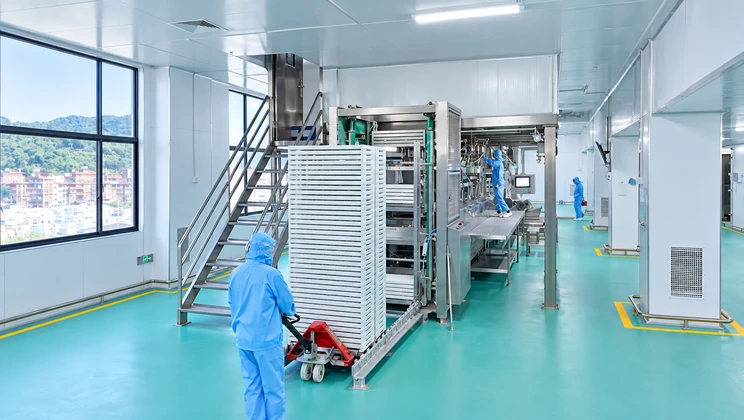
A factory audit usually starts with certificates and ends with a walk along the production line. The certificates tell you what systems the factory has documented. The line tells you something the documents cannot: what the factory can actually make and where its real capacity sits. Buyers who know how to read a gummy line can learn most of what they need in one visit, or even in a well-planned video call.
This article follows the line in the order the product moves through it, from cooking to depositing, drying, surface treatment, and packing. For the process itself in consumer terms, our overview of how gummies are made covers the basics; this article stays on the buyer’s side of the glass.
The Depositing System Tells You the Product Range
The first thing to identify on any gummy line is the depositing system, because it defines what the factory can produce. Classic gummies run on starch mogul lines, where the cooked mass is deposited into impressions pressed into trays of food-grade starch. The starch forms the shape while the piece sets and helps draw moisture out of the mass, and the used starch is dried, sifted, and returned to the process.
A mogul line handles complex and highly detailed shapes at high volume, which is why it remains the majority technology for classic confectionery gummies. A factory with a large mould library on such a line can cover a wide shape catalogue, and a line with multi-shot depositing can produce two-colour and layered pieces in one pass. If your program needs filled centres or very fine surface detail, the depositing equipment is where you find out whether the conversation continues.
Cooking and Recipe Control
Upstream of the depositor sits the cooking system. Several steps along the line influence how the product turns out, and cooking is one of the main ones. The recipe is cooked to a target solids level, and flavour, colour, and acid are dosed at controlled rates.
You do not need to read the instruments to judge this part. Ask how a batch is recorded and ask to see one. A factory that can show you a batch record with temperatures, solids, and dosing values runs its recipes from documents. A factory that cannot show one runs them from memory, which makes the recipe hard to verify during an audit.
Drying Is the Real Capacity Question
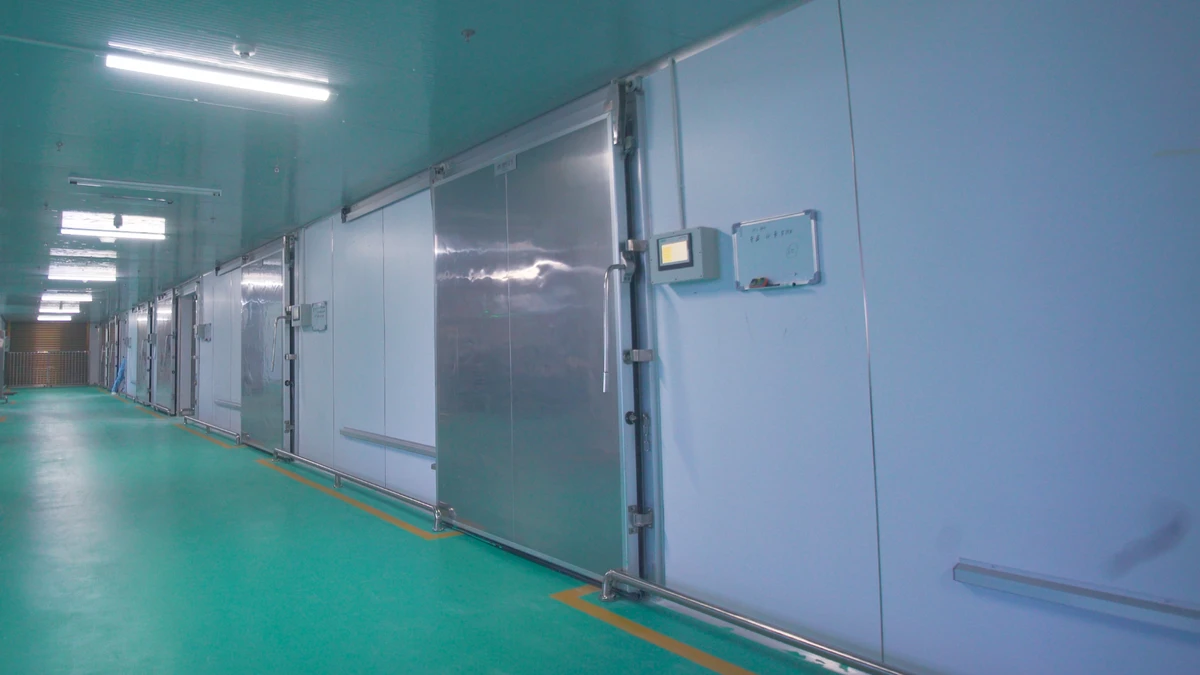
Buyers usually estimate capacity by looking at the depositor, because it is the fast, visible part of the line. The slower and more honest answer sits in the drying rooms. Depositing a batch takes a fraction of the time the pieces then spend drying to their target moisture, and the number of trays a factory can hold under controlled temperature and humidity is what actually limits output.
Drying also decides shelf life. A gummy’s final moisture and water activity determine how long it stays stable in the pack, and that endpoint is a process parameter, not a guess: current food-safety guidance treats the drying endpoint as something to be set, measured with calibrated instruments, and verified per batch. When you walk the drying area, the questions that matter are simple: is the drying time written into the process sheet for each product, and is the moisture target checked on the finished pieces. A factory that answers both from documents is managing shelf life as data. Documented targets provide a more reliable basis for consistency than operator experience alone
Surface Treatment Shows the Finishing Range
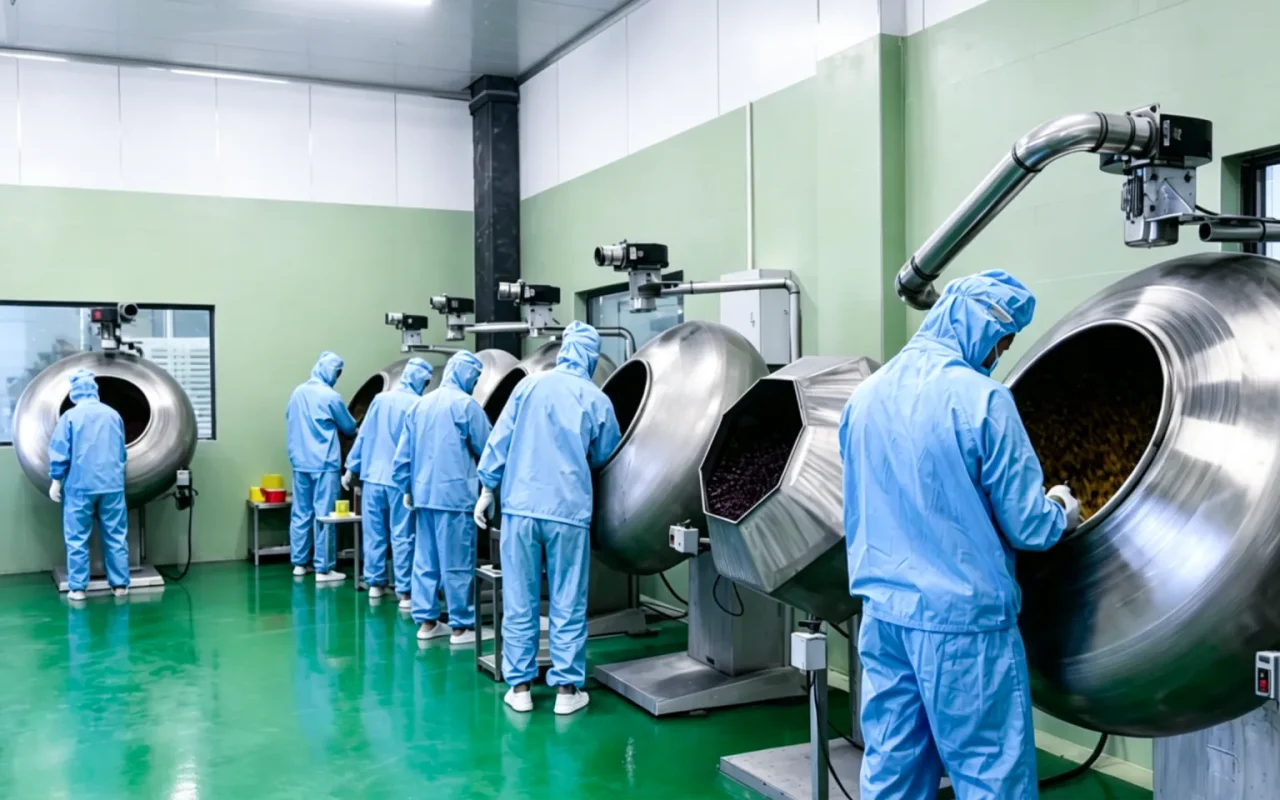
After drying, pieces go through finishing, and this stage is smaller in footprint but tells you about the factory’s SKU coverage. The work happens in drums. An oiling drum applies the thin surface layer that keeps pieces from sticking and gives the glossy finish. A sanding drum applies the crystalline coatings: sugar sanding and sour sanding run on the same machine, since both are dry coatings tumbled onto a tacky surface. A polishing drum handles the final surface work where a brighter finish is specified.
The useful question here is coverage and control. A factory that runs oiling, sanding, and polishing in dedicated equipment can cover most of the coating combinations a gummy program asks for. And because the coating is the most moisture-sensitive part of a sanded product, the finishing area is also where you see how the factory handles its most delicate goods between drying and packing.
Packing Lines Show You the Commercial Side
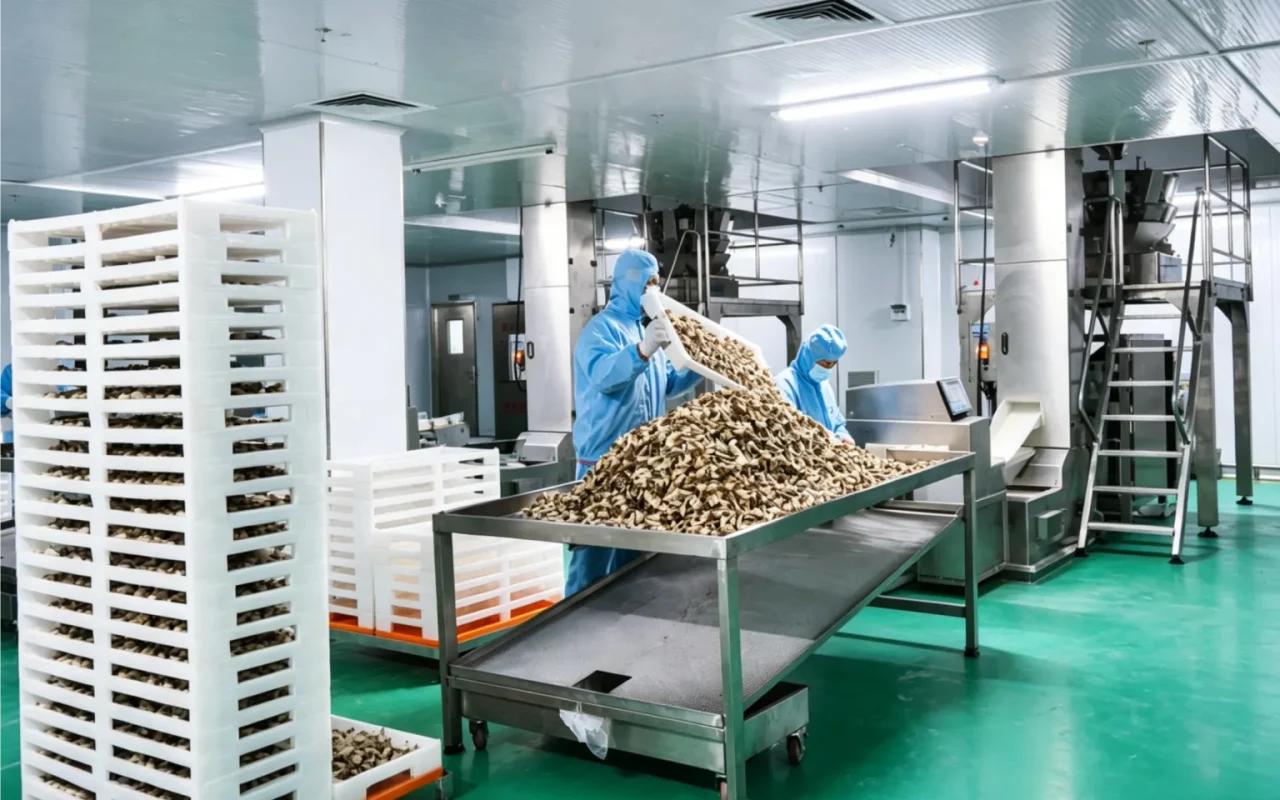
The packing hall answers a different set of questions. The formats on the floor, pouches, jars, gift boxes, or bulk bags, tell you which channels the factory already serves. The level of automation tells you about labour structure and how packing output is controlled. Labelling and coding equipment tells you whether market-specific labels and barcodes can be handled in-house or get outsourced.
This stage also reveals how the factory treats the last control point before goods leave. Check-weighing, metal detection, and date coding on the line are signs that packing is treated as part of quality control rather than as a shipping department. The full packaging decision, from film barrier to fill level, is a topic of its own; during the audit, the formats and the control points are what you can verify with your eyes.
The Lab Next to the Line
The quality routine shows how shelf life and batch traceability are verified.
The routine counts more than the equipment list: retained samples from each batch, moisture checks on finished goods, and records that connect a shipped carton back to the batch it came from. A factory can run this in its own lab or through documented third-party testing; what matters is that the routine exists. A factory that keeps it can investigate a complaint by pulling the retained sample and the batch record.
A Checklist for the Walk
The table below condenses the line walk into what to look at and what it tells you.
| What to look at | What it tells you |
| Depositing system and mould library | The product range the factory can actually cover |
| Cooking records | Whether the recipe runs from written documents |
| Drying rooms and moisture targets | Real capacity and how shelf life is managed |
| Oiling, sanding, and polishing drums | The coating range and finish control |
| Packing formats and control points | Which channels the factory serves and how goods leave |
| Lab routine and retained samples | Whether complaints can be investigated with evidence |
How Sweeto’s Line Is Set Up
Our production runs on starch mogul depositing lines with a mould library built up across our catalogue, covering classic gummies in a wide range of shapes and piece weights, with multi-colour depositing for the two-tone and layered pieces in the range. Cooking is recorded per batch, and flavour, colour, and acid dosing follows the recipe sheet for the product in production.
Drying is handled in rooms built around our own drying equipment, which dries faster and more evenly than the vertical dryers commonly used in the industry. In a vertical dryer the pieces nearest the airflow dry more than the pieces farther away, which leaves uneven moisture within the same batch; our design moves air across the trays from more directions, so the batch dries evenly. Drying time and moisture targets are written into the process sheet for each product, and finished pieces are checked against the moisture specification before they move to finishing.
Buyers are welcome to verify all of this the way this article suggests. We arrange video audits for buyers who cannot travel and on-site visits for those who can, and the walk follows the same order described above. An overview of the production and quality systems is on our capabilities page, and program-specific questions can start from our custom program or the contact page.